


Can portable inkjet printers meet diverse printing needs in terms of print quality?
Release Time : 2026-02-17
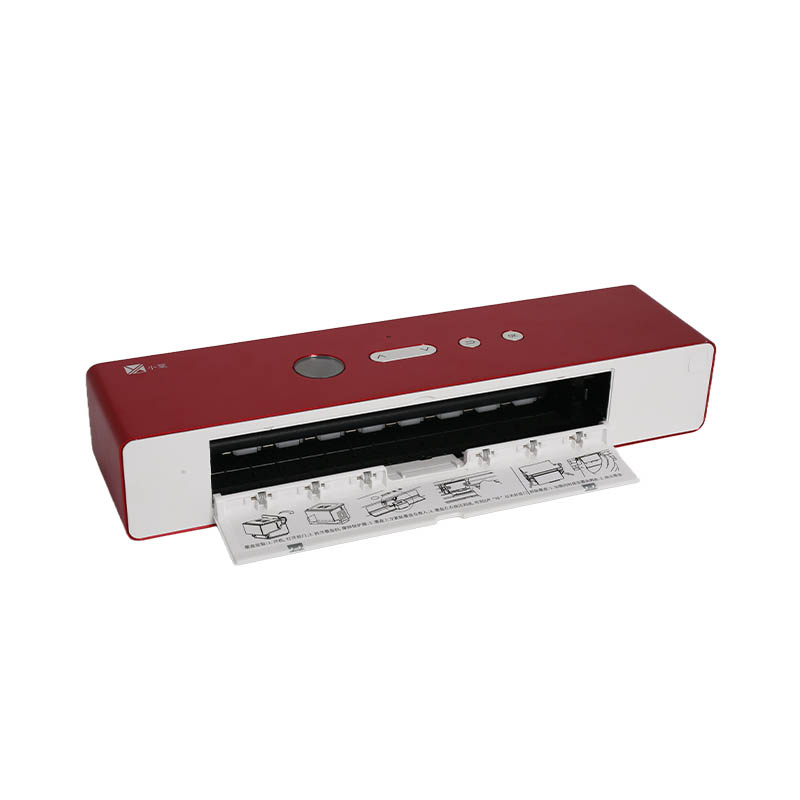
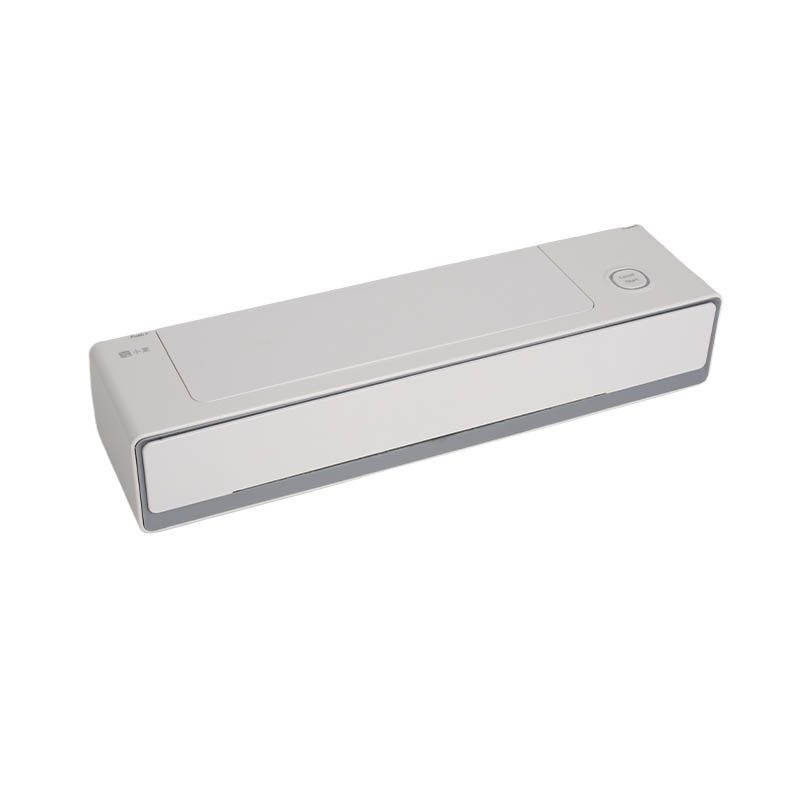
With the surge in demand for mobile work, instant creation, and personalized label printing, portable inkjet printers have evolved from "emergency tools" into reliable output terminals in professional scenarios. Within such a compact body, is the print quality sufficient for various tasks such as photo output, document processing, barcode labels, art journals, and even educational materials? The answer is yes—thanks to breakthroughs in technologies such as microelectromechanical systems (MEMS) printheads, high-precision color management, and intelligent media recognition, modern portable inkjet printers can achieve surprisingly high-quality output within limited space.
1. High-Resolution Output: Detail is Clearly Visible
Most mainstream portable inkjet printers generally support 1200×1200 dpi or even higher physical resolutions. Some high-end models achieve an equivalent visual effect of 4800×1200 dpi through multi-grayscale droplet control. This means that even on a 3×5-inch photo, it can present delicate skin tones, sharp text edges, and clear fine-line charts. For example, when printing logistics waybills, 1D/2D barcodes can be accurately recognized by high-speed scanning equipment; when outputting student assignments or meeting minutes, even fonts as small as 6-point font remain smooth and free of ink bleeding. This high precision stems from the precise control of the micro piezoelectric printhead—which can eject thousands of picoliter ink droplets per second, ensuring uniform dot matrix distribution and eliminating the "broken lines" or "banding" phenomena common in traditional portable devices.
2. Wide Color Gamut and Color Consistency: From Documents to Images
To meet the diverse needs ranging from business PPTs to travel photos, portable inkjet printers generally employ four-color or even six-color ink systems and have built-in ICC color profiles. Through deep integration with mobile apps, the device can automatically correct color differences between the screen and the paper, achieving "what you see is what you get." Some models also support professional-grade sRGB or Adobe RGB color gamut coverage, making blue skies in landscape photos purer and skin tones in portraits more natural. More importantly, next-generation pigment-based or hybrid ink technologies significantly improve lightfastness and water resistance—printed photos can remain fade-free indoors for decades and won't smudge even if accidentally splashed with water, greatly expanding their reliability in creative and archival applications.
3. Intelligent Media Recognition and Adaptive Printing
The core challenge of diverse needs lies in the differences in media—ordinary copy paper, glossy photo paper, self-adhesive labels, and even kraft paper or cloth stickers have vastly different ink absorption and surface tension. Advanced portable printers automatically adjust ink volume, drying time, and paper feed speed by manually selecting the media type through built-in sensors or an app. For example, they reduce ink penetration on label paper to prevent back-side printing; reduce paper feed speed on thick cardstock to avoid jams; and optimize jetting frequency on thermal or coated paper to prevent buildup. Some devices also support borderless printing to meet the aesthetic requirements of social media photos or journal decorations. This "one machine for multiple media" flexibility makes it suitable for e-commerce shipping, event check-ins, and parent-child crafts, among other scenarios.
4. Scenario-Based Quality Optimization: Balancing Speed and Precision on Demand
Portable inkjet printers typically offer multiple printing modes, allowing users to flexibly choose according to their needs. When quickly printing hundreds of waybills at a courier station, a high-speed mode can be used, sacrificing a slight increase in sharpness for efficiency; while printing wedding invitations or art studies, a high-quality mode can be switched to, enabling multiple inkjet passes and color calibration. Furthermore, the anti-clogging printhead design and automatic cleaning function ensure that even after several days of inactivity, the first print will still maintain vibrant colors and complete lines, avoiding the "uselessness after prolonged storage" problem of traditional portable devices.
In summary, portable inkjet printers have broken through the conventional wisdom of "small means compromise," achieving near-desktop-level print quality within a palm-sized container through precision engineering and intelligent algorithms. It is not only an extension of mobile office capabilities but also a high-quality output terminal for creative expression, business operations, and life documentation. In an era of "print what you want, anytime, anywhere," its print quality truly has the ability to meet diverse needs.
1. High-Resolution Output: Detail is Clearly Visible
Most mainstream portable inkjet printers generally support 1200×1200 dpi or even higher physical resolutions. Some high-end models achieve an equivalent visual effect of 4800×1200 dpi through multi-grayscale droplet control. This means that even on a 3×5-inch photo, it can present delicate skin tones, sharp text edges, and clear fine-line charts. For example, when printing logistics waybills, 1D/2D barcodes can be accurately recognized by high-speed scanning equipment; when outputting student assignments or meeting minutes, even fonts as small as 6-point font remain smooth and free of ink bleeding. This high precision stems from the precise control of the micro piezoelectric printhead—which can eject thousands of picoliter ink droplets per second, ensuring uniform dot matrix distribution and eliminating the "broken lines" or "banding" phenomena common in traditional portable devices.
2. Wide Color Gamut and Color Consistency: From Documents to Images
To meet the diverse needs ranging from business PPTs to travel photos, portable inkjet printers generally employ four-color or even six-color ink systems and have built-in ICC color profiles. Through deep integration with mobile apps, the device can automatically correct color differences between the screen and the paper, achieving "what you see is what you get." Some models also support professional-grade sRGB or Adobe RGB color gamut coverage, making blue skies in landscape photos purer and skin tones in portraits more natural. More importantly, next-generation pigment-based or hybrid ink technologies significantly improve lightfastness and water resistance—printed photos can remain fade-free indoors for decades and won't smudge even if accidentally splashed with water, greatly expanding their reliability in creative and archival applications.
3. Intelligent Media Recognition and Adaptive Printing
The core challenge of diverse needs lies in the differences in media—ordinary copy paper, glossy photo paper, self-adhesive labels, and even kraft paper or cloth stickers have vastly different ink absorption and surface tension. Advanced portable printers automatically adjust ink volume, drying time, and paper feed speed by manually selecting the media type through built-in sensors or an app. For example, they reduce ink penetration on label paper to prevent back-side printing; reduce paper feed speed on thick cardstock to avoid jams; and optimize jetting frequency on thermal or coated paper to prevent buildup. Some devices also support borderless printing to meet the aesthetic requirements of social media photos or journal decorations. This "one machine for multiple media" flexibility makes it suitable for e-commerce shipping, event check-ins, and parent-child crafts, among other scenarios.
4. Scenario-Based Quality Optimization: Balancing Speed and Precision on Demand
Portable inkjet printers typically offer multiple printing modes, allowing users to flexibly choose according to their needs. When quickly printing hundreds of waybills at a courier station, a high-speed mode can be used, sacrificing a slight increase in sharpness for efficiency; while printing wedding invitations or art studies, a high-quality mode can be switched to, enabling multiple inkjet passes and color calibration. Furthermore, the anti-clogging printhead design and automatic cleaning function ensure that even after several days of inactivity, the first print will still maintain vibrant colors and complete lines, avoiding the "uselessness after prolonged storage" problem of traditional portable devices.
In summary, portable inkjet printers have broken through the conventional wisdom of "small means compromise," achieving near-desktop-level print quality within a palm-sized container through precision engineering and intelligent algorithms. It is not only an extension of mobile office capabilities but also a high-quality output terminal for creative expression, business operations, and life documentation. In an era of "print what you want, anytime, anywhere," its print quality truly has the ability to meet diverse needs.