


How should printer battery capacity and voltage be matched to the power consumption requirements of different wireless printer models?
Release Time : 2025-12-08
In scenarios such as mobile office, retail POS, logistics delivery, and field service, the portability of wireless printers greatly improves work efficiency. The core supporting this mobility is its dedicated printer battery. However, not all batteries are "plug and play"—different wireless printer models have different power requirements in startup, printing, and standby states. Therefore, the battery capacity and voltage must be precisely matched to the printer's power consumption characteristics to ensure stable operation and avoid unexpected shutdowns or hardware damage.
First, voltage is the primary matching hurdle. Each wireless printer's power management system is designed based on a specific operating voltage, typically determined by internal circuitry, motor drives, and printhead heating elements. If the battery output voltage is too high, it may damage sensitive electronic components; if the voltage is too low, it will not be able to drive the printing mechanism properly, leading to paper jams, printing interruptions, or even motherboard resets. Therefore, the nominal voltage of the original battery is not arbitrarily set but strictly follows the input requirements of the printer's internal power module. This matching is not only reflected in static values, but also in the stability of voltage during discharge—a high-quality battery can maintain a stable voltage platform as the charge gradually decreases, avoiding low-voltage protection triggered by "rapid voltage drop."
Secondly, capacity determines battery life, but it needs to be dynamically assessed in conjunction with actual power consumption. Capacity (usually measured in milliampere-hours) reflects the total amount of electrical energy stored in the battery, but what truly affects usage time is the printer's instantaneous and average power consumption under different tasks. For example, although thermal printing does not require ink, the current surges momentarily when the printhead heats up; and models with automatic cutters or Bluetooth/Wi-Fi modules continue to consume power even in standby mode. Therefore, high-capacity batteries are not necessarily suitable for all models—if the printer itself has extremely low power consumption, excessive capacity will increase weight and cost; conversely, for commercial equipment used in high-frequency, multi-page continuous printing, small-capacity batteries will struggle to support a complete workflow. The ideal matching provides just the right amount of battery life redundancy while meeting the maximum power demand for a single task.
Furthermore, the communication protocol between the battery and the printer also implicitly contains matching logic. Many modern wireless printers can not only read battery level but also identify battery type, health status, and even whether it's an original accessory. This intelligent interaction relies on the collaboration between the battery's built-in management chip and the printer's main control unit. Using an incompatible battery, even if the voltage and capacity seem compatible, can lead to functional limitations (such as disabling fast charging) or frequent errors due to communication gaps, impacting the user experience.
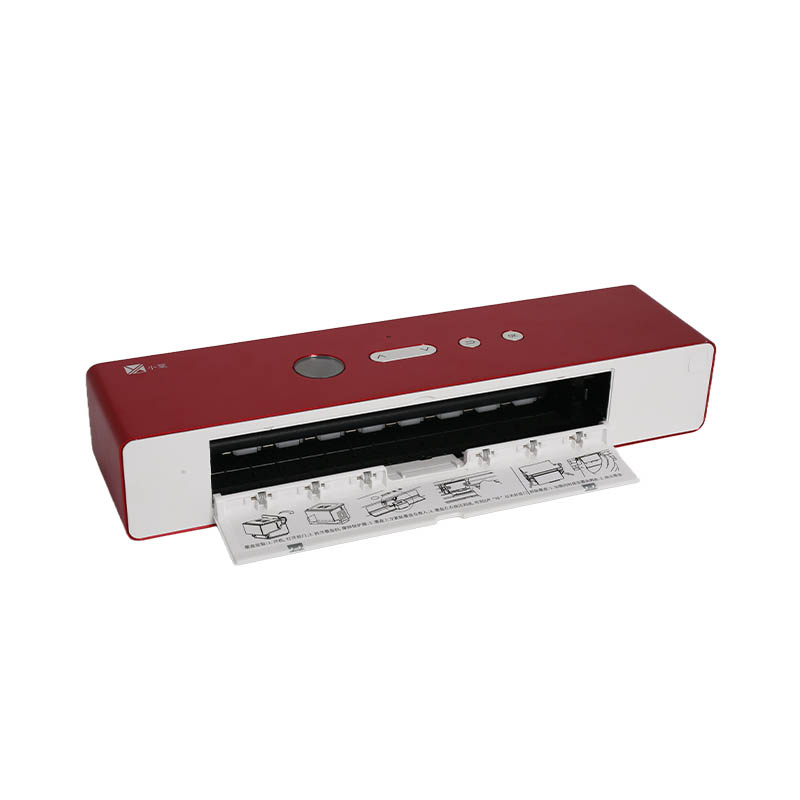
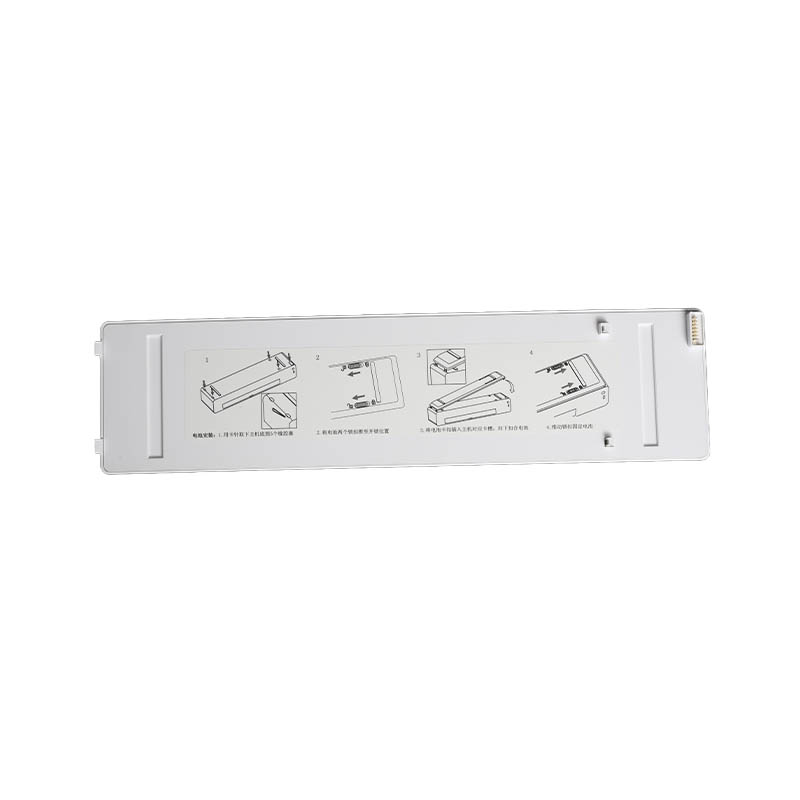
It's worth noting that the physical interface and electrical characteristics are equally critical. Different series of printers from the same brand may have different battery compartment sizes, contact layouts, and even polarity definitions. Forcing the use of incompatible batteries can result in poor contact or even short circuits and damage. Therefore, "matching" is not just about matching electrical parameters but also about the overall coordination of mechanical structure and safety mechanisms.
Finally, from the user's perspective, matching also means adapting to the usage scenario. Outdoor workers need batteries that can discharge stably at low temperatures, delivery personnel prioritize quick replacement and charging convenience, while office users may value cycle life and safety. These needs ultimately influence battery design choices.
In short, matching a printer battery with a wireless printer is not simply a matter of "it just needs to be installed," but a sophisticated electrical dialogue—voltage is the language, capacity is the vocabulary, and safety and intelligence are the grammatical rules. Only when these three elements are harmoniously unified can every mobile printing be effortless, truly achieving the efficient experience of "free printing without power interruption." Behind this lies the silent fusion of power engineering, materials science, and user experience.
First, voltage is the primary matching hurdle. Each wireless printer's power management system is designed based on a specific operating voltage, typically determined by internal circuitry, motor drives, and printhead heating elements. If the battery output voltage is too high, it may damage sensitive electronic components; if the voltage is too low, it will not be able to drive the printing mechanism properly, leading to paper jams, printing interruptions, or even motherboard resets. Therefore, the nominal voltage of the original battery is not arbitrarily set but strictly follows the input requirements of the printer's internal power module. This matching is not only reflected in static values, but also in the stability of voltage during discharge—a high-quality battery can maintain a stable voltage platform as the charge gradually decreases, avoiding low-voltage protection triggered by "rapid voltage drop."
Secondly, capacity determines battery life, but it needs to be dynamically assessed in conjunction with actual power consumption. Capacity (usually measured in milliampere-hours) reflects the total amount of electrical energy stored in the battery, but what truly affects usage time is the printer's instantaneous and average power consumption under different tasks. For example, although thermal printing does not require ink, the current surges momentarily when the printhead heats up; and models with automatic cutters or Bluetooth/Wi-Fi modules continue to consume power even in standby mode. Therefore, high-capacity batteries are not necessarily suitable for all models—if the printer itself has extremely low power consumption, excessive capacity will increase weight and cost; conversely, for commercial equipment used in high-frequency, multi-page continuous printing, small-capacity batteries will struggle to support a complete workflow. The ideal matching provides just the right amount of battery life redundancy while meeting the maximum power demand for a single task.
Furthermore, the communication protocol between the battery and the printer also implicitly contains matching logic. Many modern wireless printers can not only read battery level but also identify battery type, health status, and even whether it's an original accessory. This intelligent interaction relies on the collaboration between the battery's built-in management chip and the printer's main control unit. Using an incompatible battery, even if the voltage and capacity seem compatible, can lead to functional limitations (such as disabling fast charging) or frequent errors due to communication gaps, impacting the user experience.
It's worth noting that the physical interface and electrical characteristics are equally critical. Different series of printers from the same brand may have different battery compartment sizes, contact layouts, and even polarity definitions. Forcing the use of incompatible batteries can result in poor contact or even short circuits and damage. Therefore, "matching" is not just about matching electrical parameters but also about the overall coordination of mechanical structure and safety mechanisms.
Finally, from the user's perspective, matching also means adapting to the usage scenario. Outdoor workers need batteries that can discharge stably at low temperatures, delivery personnel prioritize quick replacement and charging convenience, while office users may value cycle life and safety. These needs ultimately influence battery design choices.
In short, matching a printer battery with a wireless printer is not simply a matter of "it just needs to be installed," but a sophisticated electrical dialogue—voltage is the language, capacity is the vocabulary, and safety and intelligence are the grammatical rules. Only when these three elements are harmoniously unified can every mobile printing be effortless, truly achieving the efficient experience of "free printing without power interruption." Behind this lies the silent fusion of power engineering, materials science, and user experience.